Thinking about a Turtle Creek condo and wondering what your HOA dues actually cover? You are not alone. In high-rise buildings, those monthly dues can feel mysterious, yet they have a big impact on your budget, lifestyle, and future resale. In this guide, you will learn what is typically included, what is not, and exactly how to review the documents before you buy or sell. Let’s dive in.
HOA dues, simply explained
Condo HOA dues are regular payments that fund the day-to-day operation and long-term health of your community. In Turtle Creek, many buildings are staffed, amenity-rich, and mechanically complex, so dues often support more than basic maintenance.
- Operating expenses cover routine items like common-area utilities, cleaning, elevator servicing, and staff.
- Reserve contributions set aside money for big-ticket repairs, such as roof or elevator replacements.
- Special assessments can be charged if dues and reserves are not enough to cover a major project.
If you want a deeper primer on how associations work, the Community Associations Institute offers helpful guidance for owners and buyers through the Community Associations Institute.
What dues commonly include in Turtle Creek
Each building’s governing documents set the exact inclusions, but these are common in Turtle Creek high-rises.
Building maintenance and systems
- Exterior and structural upkeep for the building envelope, roof, balconies’ structural portions, and façades.
- Common areas like lobbies, hallways, stairwells, landscaping, parking garages, and trash rooms.
- Elevator maintenance and inspection contracts.
- Fire and life-safety systems, and pest control for shared spaces.
- Utilities for common spaces, such as lighting, water for irrigation, and HVAC in shared areas. Some buildings include water and sewer for individual units, so confirm in the documents.
Staffing, access, and parking
- Property management and accounting.
- On-site staff such as concierge, doorman, engineers, janitorial, and security.
- Controlled access systems and surveillance for common areas.
- Valet operations or garage staffing where provided, plus maintenance and security for parking facilities.
Amenities and lifestyle services
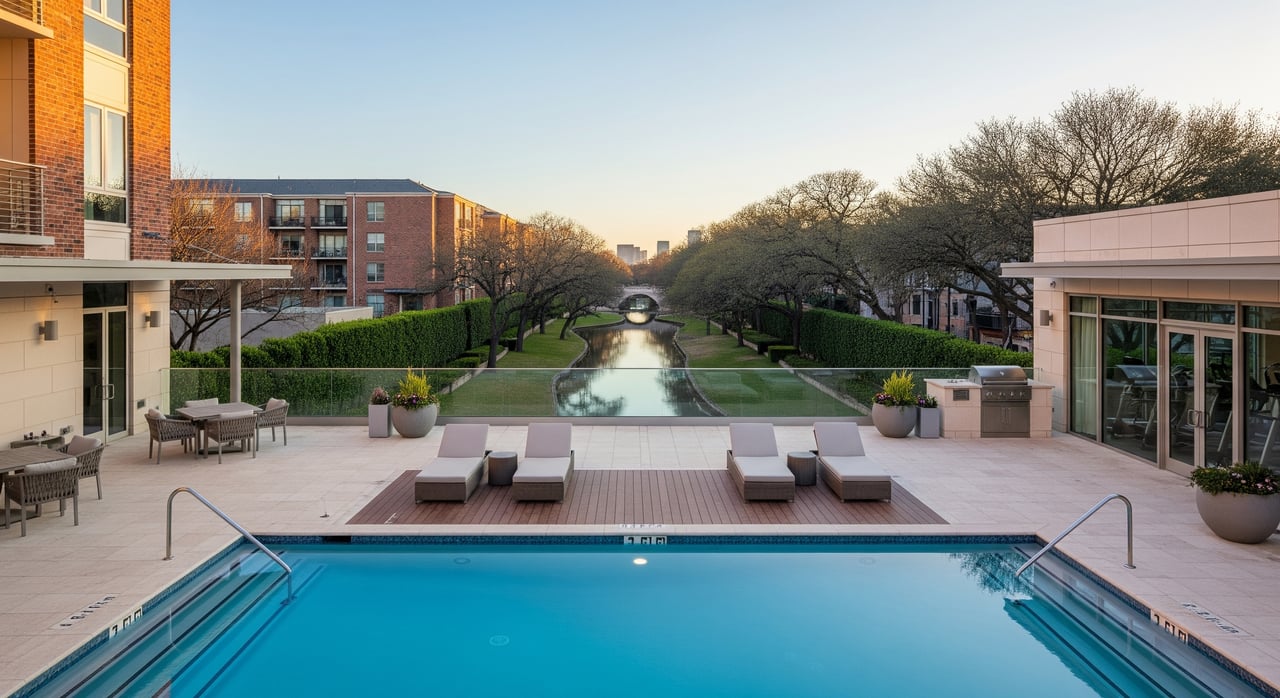
- Fitness centers, pools, club rooms, rooftop decks, and business centers.
- Package rooms and meeting spaces.
- Routine window washing and scheduled façade inspections in older luxury towers.
Insurance and reserves
- The association’s master insurance policy typically covers the structure and common elements. Interior finishes and personal property are usually not covered.
- Regular transfers to the reserve fund for future capital projects, often guided by a reserve study.
For insurance basics specific to condominium ownership, review the U.S. Department of Housing and Urban Development’s buyer resources via HUD condominium guidance.
What dues usually do not include
- Your unit’s interior finishes, appliances, and repairs.
- Your personal HO-6 insurance policy and liability coverage.
- Your mortgage payment and property taxes on your unit.
- Utilities billed directly to your unit, such as electricity, internet, and cable. Some buildings include water and trash in dues.
- One-time special assessments, unless the association has already budgeted or disclosed them as part of dues.
Tip: Always verify whether water, trash, and central heating or cooling are included. It varies by building in Turtle Creek.
Turtle Creek factors that affect dues
- Building age and capital needs. Older high-rises may require larger reserves or upcoming modernization for elevators, mechanical systems, or façade work.
- Labor and insurance costs. Increases in staffing wages and property insurance premiums can raise operating budgets.
- Amenities and services. Concierge, valet, and robust amenity packages generally lead to higher dues.
- Parking operations. Secured garages, valet, and staffing add complexity and cost.
These are not negatives by themselves. Well-maintained buildings with strong services can protect value and enhance your experience. The key is understanding how the budget supports those services today and over time.
How to review a Turtle Creek HOA package
Your best protection is a thorough review of the association’s disclosures. In Texas, condominium governance is set by the declaration and state law under the Uniform Condominium Act. You can reference statutes through the Texas Property Code.
Documents to request
- Declaration/CC&Rs and bylaws to understand maintenance responsibilities and assessment rules.
- Rules and regulations, including pet and leasing policies.
- The current budget and year-to-date financials.
- Reserve study, current reserve balance, and projected capital projects.
- Board meeting minutes for the past 6 to 24 months to spot upcoming projects or recurring issues.
- Master insurance certificate with coverage limits and deductible amounts.
- A list of any current or pending special assessments, plus a history of dues increases.
- Management agreement if a third-party manager is engaged.
- Litigation disclosures and any recent engineering or inspection reports.
- Parking agreements or leases tied to the unit, plus storage arrangements if applicable.
- Utility billing setup to confirm what is master-metered versus owner-metered.
- Owner delinquency rate and the association’s collection policy.
- The Texas resale certificate or association disclosure package.
Red flags and smart questions
- Are reserves adequate for the building’s age and systems, or are special assessments likely?
- Has insurance become more expensive, and what is the master policy deductible?
- Do minutes mention water intrusion, elevator outages, or façade repairs?
- How many owners are delinquent, and how is the board addressing collections?
- What major projects are planned in the next 3 to 5 years, and how will they be funded?
For additional consumer-focused guidance, the National Association of Realtors provides helpful materials for condo buyers and owners through NAR condo resources.
Budgeting tips for buyers and sellers
Buyers
- Compare dues across similar Turtle Creek buildings, but dig into what you get for the money. Staffing and amenities can justify higher dues.
- Analyze the line items in the budget, not just the total. Look for realistic insurance, utilities, and reserve contributions.
- Price in expected increases. Associations often adjust dues annually for inflation and capital planning.
- Carry HO-6 insurance to cover interior finishes, personal property, and loss assessments if needed.
Sellers
- Confirm your account is current and disclose any assessments. Being proactive builds buyer confidence.
- Order the resale certificate early to avoid delays.
- Be ready to explain what your dues cover. A clear, complete picture can strengthen your listing.
Financing and resale considerations
Lenders care about association health. Underwriting often looks at reserves, owner occupancy, and delinquency rates. Very high dues or thin reserves can complicate approvals. Ask your lender what documentation they require and engage them early, especially for older high-rises.
A well-managed association with transparent records and realistic reserves can support value and make your condo more attractive to future buyers. A history of special assessments does not automatically hurt resale, but unclear planning and surprise assessments can.
Helpful local records and references
When you need official documents or property information, these sources can help:
- Recorded declarations, amendments, and association liens can be found through the Dallas County Clerk.
- Property records and tax details for specific condominiums are available at the Dallas Central Appraisal District.
- For broader education on association living and reserve planning, explore the Community Associations Institute and federal guidance via HUD condominium resources.
The bottom line
HOA dues in Turtle Creek usually cover building operations, staff, amenities, master insurance for common areas, and reserves. They rarely cover your interior finishes, personal insurance, or unit-level utilities. The best way to protect your investment is to review the budget, reserves, minutes, and insurance details before you commit. If something is unclear, ask for clarification in writing and consult the statutes in the Texas Property Code when needed.
If you want an expert to walk you through a specific building’s HOA package or to position your condo for a smooth sale, reach out to the Cardoza Group, Inc. We combine local knowledge with a concierge approach, so you can move forward with confidence.
FAQs
Are utilities included in Turtle Creek condo dues?
- Common-area utilities are almost always included, and some buildings include water and trash for units, but electricity and internet are often billed directly. Confirm in the documents.
What does the master insurance policy cover in a high-rise?
- The association’s policy typically covers the structure and shared elements, not interior finishes or personal property. You usually need an HO-6 policy for your unit.
Why do reserve funds matter for Turtle Creek buildings?
- Reserves pay for large repairs like elevator modernization or façade work. Strong reserves reduce the risk of special assessments.
How likely are special assessments in older luxury towers?
- They can occur if reserves are insufficient for major projects or emergencies. Review board minutes and reserve studies to gauge risk.
Can HOA dues change after I purchase a condo?
- Yes. Boards set budgets annually, and dues can increase with higher operating costs or to rebuild reserves. Review past budgets to understand trends.
Do HOA finances affect my mortgage approval?
- Lenders review association health, including reserves and delinquency. Weak finances or very high dues can make underwriting harder, so get your lender involved early.