If you are thinking about buying a rental in Arlington, it is easy to focus on headline rent numbers and miss the details that shape long-term returns. You want a property that fits your budget, rents consistently, and holds up well over time, but that only happens when you underwrite with local facts. In this guide, you will get a practical look at Arlington’s rental mix, rent benchmarks, expenses, and financing considerations so you can evaluate opportunities with more confidence. Let’s dive in.
Arlington rental market basics
Arlington sits inside the larger Dallas-Fort Worth rental market, and the city has a sizable base of both renters and owners. According to the U.S. Census QuickFacts for Arlington, the city has 403,672 residents, 142,455 households, a 54.3% owner-occupied housing unit rate, a median household income of $75,171, and a median gross rent of $1,470.
That mix matters if you are planning a long-term hold. Arlington is not an owner-only market, but it is not overwhelmingly renter-dominated either. For investors, that creates a balanced environment where rental demand exists across several property types instead of being tied to just one segment.
Arlington property types to consider
Arlington is not a one-product rental market. Based on the city’s 2025-2029 Consolidated Plan, about 60% of the housing stock is detached single-unit structures, 6% is attached single-unit structures, 7% is in 2-4 unit buildings, 17% is in 5-19 unit buildings, 9% is in buildings with 20 or more units, and 2% is mobile homes or other nontraditional housing.
In plain terms, that means you can pursue several long-term rental strategies in Arlington. Detached houses are a major part of the local housing stock, but attached homes, duplexes, small multifamily, and larger apartment-style assets are also part of the market.
Single-family rentals
Single-family homes remain the dominant property type in Arlington’s housing stock. For many investors, that can mean a familiar leasing model, broad tenant appeal, and a straightforward resale path later.
This route can make sense if you want a long-term asset that may attract renters looking for more space. It can also fit buyers who may eventually want flexibility to sell to an owner-occupant instead of only another investor.
Duplexes and small multifamily
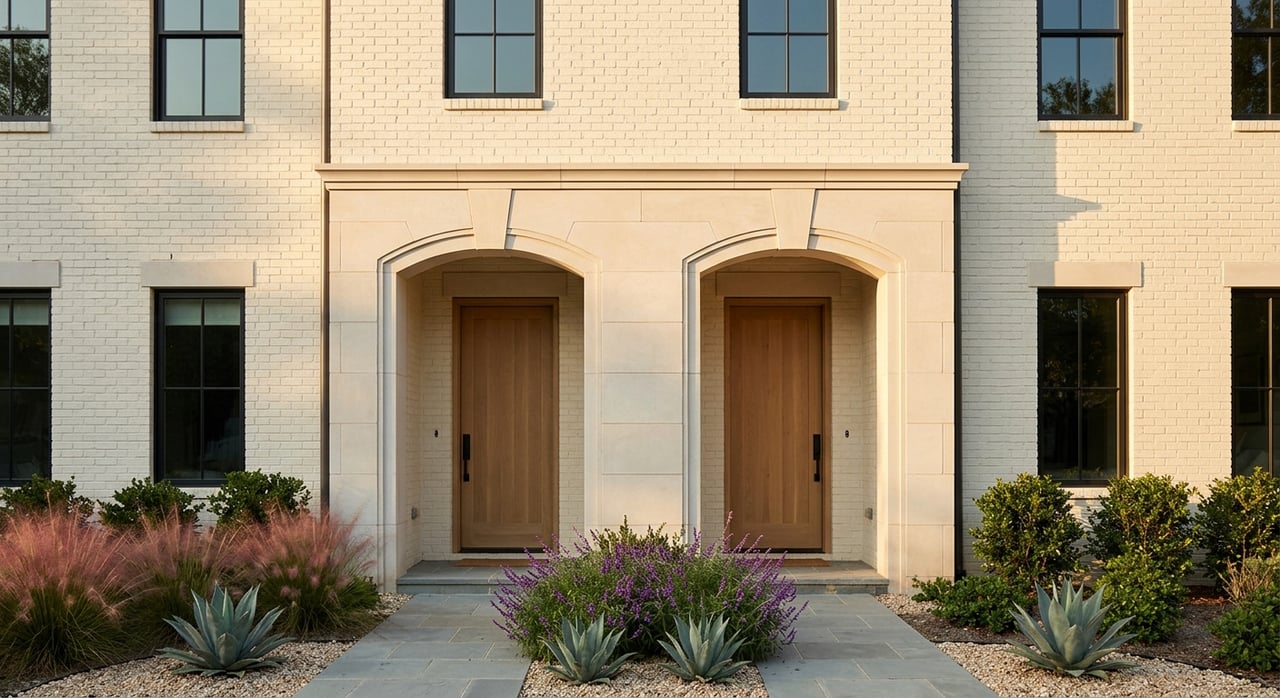
If you want multiple income streams under one roof, duplexes and 2-4 unit properties deserve a close look. Arlington’s housing mix includes smaller multifamily inventory, which gives investors another way to spread vacancy risk across more than one unit.
The city also recognizes a range of private-market rental types. On its landlord services page, the Arlington Housing Authority references apartment units, duplexes, single-family homes, and townhomes, which reinforces the variety of rental formats active in the local market.
Bedroom counts that match renter demand
Unit size matters just as much as property type. The city’s consolidated plan shows that renter households are concentrated in practical unit sizes, with about 31% in 1-bedroom units, 34% in 2-bedroom units, and 31% in 3-bedroom or larger units.
That is a helpful signal for long-term investors. In Arlington, 1- to 3-bedroom rentals appear to line up best with the city’s existing renter base, which makes them important categories to analyze when you compare properties.
Arlington rent benchmarks
Arlington’s citywide median gross rent is $1,470, but you should treat that as a broad reference point, not a guaranteed target for every listing. Achievable rent can shift based on property type, bedroom count, condition, and ZIP code.
That is why it helps to compare more than one source before you build a pro forma. Looking at a range gives you a more realistic underwriting model and can help you avoid overestimating income.
Apartment-style rent ranges
According to the Apartments.com Arlington rent guide, average apartment rents in March 2026 were reported at $1,124 for a one-bedroom, $1,515 for a two-bedroom, and $1,934 for a three-bedroom.
Those numbers are useful as a starting point, especially if you are reviewing condo-style or apartment-like inventory. Still, they are only one lens, and they may not fully capture the differences between renovated homes, duplexes, and larger rental houses.
Housing Authority benchmarks
The Arlington Housing Authority’s 2025 small-area payment standards provide another benchmark. The area-wide standards show $1,461 for a one-bedroom, $1,705 for a two-bedroom, and $2,256 for a three-bedroom unit.
When you compare these figures with apartment averages, the key takeaway is simple: Arlington rents work best as a range, not a single number. Many properties may underwrite somewhere from the low $1,000s to the low $2,000s, depending on the unit and location.
ZIP code matters
Rent variation across Arlington is meaningful. In the Housing Authority table, ZIP code 76010 shows benchmarks of $1,386 for a one-bedroom, $1,602 for a two-bedroom, and $2,244 for a three-bedroom, while 76015 shows $1,590, $1,850, and $2,450 for those same unit sizes.
That is a major difference, and it should shape how you analyze deals. If you are comparing two properties with similar square footage but different ZIP codes, you may be looking at very different rent ceilings.
Expenses to model before you buy
Strong investing is not just about rent. Your monthly carry and long-term reserves can change the picture quickly, which is why cash flow should be modeled after the full expense stack, not just principal and interest.
Fannie Mae’s landlord guidance breaks ownership costs into mortgage, taxes and fees, utilities, repairs and routine maintenance, major improvements, vacancy reserves, professional services, and other costs. That is a solid framework for evaluating Arlington rentals.
Property taxes and local fees
Property taxes are a meaningful part of the holding cost in Arlington. The city adopted a FY 2026 property tax rate of $0.6298 per $100 of assessed value, and the city notes that its share is typically about 20% to 25% of a homeowner’s total property tax bill, with the remainder coming from other taxing entities.
That means you should not underwrite taxes based only on the city rate. You need to account for the full property-tax burden, especially if you are buying a property that has appreciated or may be reassessed after closing.
Utilities and service charges
Utility-related costs also deserve attention. According to the city’s FY 2026 service rate update, minimum residential water and sewer bills increased by about $2.18 per month, average residential bills increased by about $5.89 per month, the residential refuse charge rose from $21.80 to $22.71, and the stormwater fee was set at $10 per equivalent residential unit starting October 1, 2025.
These are not huge numbers in isolation, but they add up over time. They can matter even more if you plan to cover some utilities as the landlord or if the property has a larger lot or more paved area that makes the stormwater charge more relevant.
Duplex compliance costs
If you are buying a duplex, Arlington has an extra compliance item to budget for. The city’s Duplex Inspection Program requires non-owner-occupied duplexes to be registered and inspected annually, with a fee of $13.80 per unit and a $150 reinspection fee if needed.
This is a good example of why local due diligence matters. A duplex can still be a strong investment, but you want to include these required costs and procedures in your operating plan from day one.
Condo-specific considerations
Condos can sometimes look attractive because of lower price points or easier maintenance on the exterior, but they come with a different risk profile. Fannie Mae notes on its condo project eligibility page that some condo projects can become ineligible for financing if they lack sufficient master property insurance or have unresolved critical repairs.
You should also remember that HOA dues can affect monthly cash flow. If you are considering a condo as a rental, review both the association costs and any financing limitations early.
Financing for Arlington investors
Financing can shape your strategy as much as rent does. The amount you put down, the occupancy category, and the reserves you need can all affect which properties make sense.
For small and midsize investors, this is where many promising deals become less attractive on paper. A property may look good at first glance, but once you factor in down payment requirements and reserve expectations, the numbers can change.
Down payment expectations
Under Freddie Mac conforming loan-to-value requirements, the maximum LTV is 85% for a 1-unit investment property and 75% for a 2-4 unit investment property. In practice, that points to minimum down payments of 15% for a one-unit investment and 25% for a 2-4 unit investment before lender overlays and closing costs.
That distinction matters if you are deciding between a single-family rental and a duplex or triplex. A property with more units may spread risk differently, but it can also require more cash to get into the deal.
Occupancy changes the math
Occupancy status matters a lot in financing. Freddie Mac’s same chart allows higher LTVs for primary residences than for investment properties, so if you are considering living in one unit of a 2-4 unit property, it is worth comparing owner-occupant financing with investor financing early in your search.
That comparison can open different options depending on your goals. If house hacking is part of your plan, the financing path may look very different from a pure investment purchase.
Reserve requirements
Reserves are another key part of the equation. Fannie Mae’s minimum reserve requirements state that DU requires six months of reserves for an investment property transaction, and reserve needs can increase if you already own more financed properties.
This is one of the most important long-term investing habits to build into your plan. A rental is safer when you underwrite for vacancy, maintenance, and reserves before you make an offer, not after something breaks.
A simple Arlington underwriting approach
If you want a practical way to screen deals in Arlington, keep your process simple and consistent. Start with the property type, match expected rent to bedroom count and ZIP code, then pressure-test the expenses and financing.
A helpful checklist looks like this:
- Identify the property type: single-family, townhome, duplex, condo, or small multifamily.
- Estimate rent using multiple benchmarks, not one source alone.
- Compare the bedroom count with local renter demand.
- Include taxes, utilities, maintenance, vacancy, and reserves in your model.
- Check whether local compliance items apply, especially for duplexes.
- Confirm down payment and reserve requirements before writing an offer.
This kind of disciplined approach can help you avoid chasing deals that only work on optimistic assumptions. It also gives you a cleaner way to compare one Arlington opportunity against another.
Final thoughts for long-term investors
Arlington offers more variety than many investors expect. You are not limited to one rental model here, and the city’s housing mix supports everything from detached homes to duplexes and multifamily properties.
The key is to stay local and stay realistic. In Arlington, the best investment decisions usually come from matching rent to unit size and ZIP code, budgeting carefully for taxes and utilities, and choosing financing that supports your long-term plan.
If you want help evaluating Arlington investment opportunities with a practical, data-informed approach, connect with Cardoza Group, Inc. You will get responsive guidance, local market insight, and support as you explore rental properties across DFW.
FAQs
What types of rental properties are common in Arlington, Texas?
- Arlington includes detached single-family homes, attached homes, duplexes, small multifamily buildings, and larger apartment properties, with single-family housing making up the largest share of the city’s housing stock.
What is a typical rent range for Arlington rental properties?
- Arlington rents vary by bedroom count, property type, condition, and ZIP code, with citywide and local benchmarks suggesting many rentals may underwrite from the low $1,000s to the low $2,000s.
What local costs should Arlington rental investors include in their budget?
- You should model the full property-tax burden, utility and service charges, repairs, maintenance, vacancy reserves, and any property-specific compliance costs such as duplex registration and inspections.
How much down payment is needed for an Arlington investment property?
- Based on Freddie Mac conforming guidelines, investment buyers should generally expect at least 15% down for a 1-unit investment property and 25% down for a 2-4 unit investment property before lender overlays and closing costs.
Do Arlington duplex rentals have special rules?
- Yes. Non-owner-occupied duplexes in Arlington must be registered and inspected annually, and the city charges an annual fee per unit plus a reinspection fee if needed.
Why should Arlington investors compare rent by ZIP code?
- ZIP-level benchmarks in Arlington can vary materially, so comparing rent by ZIP code helps you build a more accurate income projection and avoid overestimating cash flow.